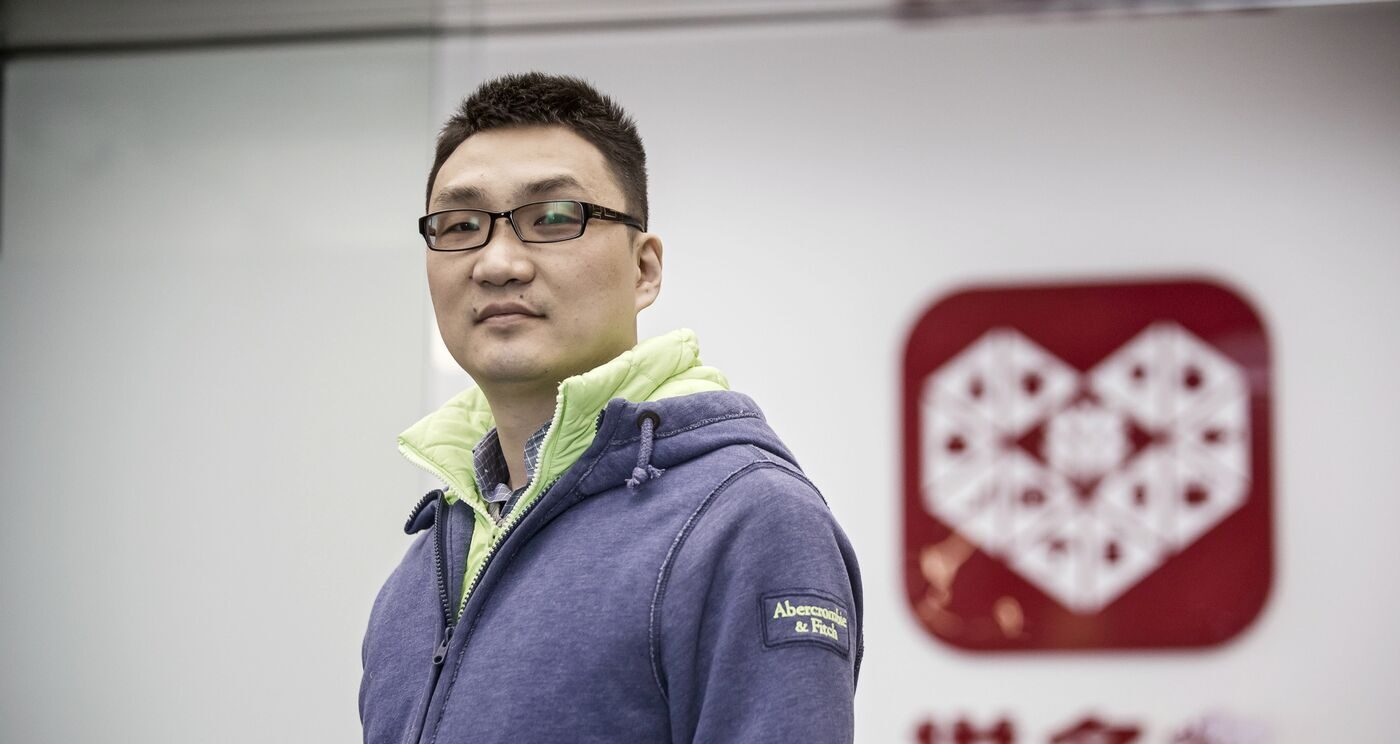
1980 – Colin Huang Zheng is born on 1 January in Hangzhou, Zhejiang. His father repairs sewing machines, and his mother packs garments in a factory. Their dinner-table talk about thread prices gives the boy an early crash course in supply chains.
1992 – Twelve-year-old Huang clinches first place in a citywide mathematics contest. The victory secures him a place at Hangzhou Foreign Languages School. Late-night coding soon replaces arcade games.
Education
1998 – He enters Zhejiang University’s Chu Kochen Honors College to major in computer science. A handwritten list titled “Colin Huang contact goals” collects email mentors from MIT and Stanford. The list becomes his networking playbook.
2002 – An exchange scholarship sends him to the University of Wisconsin–Madison. There he cold-emails Google engineer Jeff Dean about distributed systems, launching the legend of the tireless Colin Huang email spree. The note is the first of hundreds he will fire off over the years.
2004 – Google recruits him before graduation and posts him to Mountain View’s ads team. He soon returns to China to kick-start Google’s e-commerce drive. The sprint blends Silicon Valley speed with Beijing’s consumer grit.
Career & Business
2007 – Huang leaves Google and sells his recommendation-engine startup Ouku for $2 million. He funnels the proceeds into Leqee, a data-driven agency aiding rising Taobao merchants. The bet plants him firmly in China’s e-commerce soil.
2015 – Alongside five ex-Google and Tencent engineers, he launches Pinduoduo. The platform fuses group buying with social gaming, hooking price-sensitive shoppers in lower-tier cities. Viral momentum explodes almost overnight.
2018 – Pinduoduo lists on Nasdaq at $19 per share. Thirty-eight-year-old Huang tells analysts he will “steer with numbers, not gut.” Wall Street takes note of his data-first creed.
2020 – He steps down as CEO to focus on R&D but still reviews dashboards at dawn, marking latency spikes in red. Hands-on micromanagement remains his hallmark. His exacting style survives the title change.
2022 – His team debuts Temu in Boston, and U.S. downloads rocket to the top of Apple’s chart within three months. Reporters dub the surge the “Colin Huang Temu blitz.” The launch proves his formula travels.
2024 – PDD Holdings shifts its primary incorporation to Dublin. As honorary chairman, Huang flies economy to a Polish fulfillment hub and sketches a same-day delivery grid on a whiteboard. The inspection underscores his logistics obsession.
Politics
2019 – He donates ¥100 million to create Zhejiang University’s Institute for Advanced Algorithms, insisting universities, not ministries, should steer research agendas. The move frames tech autonomy as a civic duty. Skeptics grudgingly respect the gesture.
2021 – Facing antitrust scrutiny, he testifies in Beijing that platform data must stay portable so farmers can “sell oranges anywhere.” The appeal positions him as an unlikely rural advocate. Legislators mull his argument.
2023 – He pledges ¥50 million for a rural broadband drive when officials confess pig farmers still fax inventory sheets. The promise aims to drag the countryside online. Observers call it digital infrastructure by philanthropy.
Wealth
2018 – IPO day vaults Colin Huang net worth above $10 billion. Analysts rank him among China’s newest e-commerce billionaires. His ascendance becomes front-page news.
2020 – COVID-era grocery demand swells his fortune to roughly $45 billion, briefly making him China’s second-richest person. The pandemic turns Pinduoduo into a lifeline for locked-down households. Market pundits marvel at the spike.
2023 – A tech sell-off trims his wealth to about $30 billion. Bloomberg still lists him within its global top thirty. The dip feels like a speed bump.
2025 – Surge pricing tied to Temu’s European rollout nudges his stash back toward $38 billion despite fresh charitable gifts. Observers link the rebound to same-day delivery gains. Resilience becomes his brand.
Pinduoduo
2015 – The app’s bright “拼” symbol surfaces in WeChat Moments, and daily active users cross one million in eight months. Word-of-mouth growth shocks rivals. The logo becomes shorthand for bargain fun.
2019 – Pinduoduo overtakes JD.com in yearly active buyers by dangling flash-sale corn and gamified coupons. The coup cements its reputation as China’s most addictive shopping arena. Competitors scramble to copy the formula.
2021 – Huang seeds a company agritech fund, arguing Pinduoduo must boost soil yields, not just cart conversions. The initiative pushes the platform deeper into farm science. Employees label it “byte-to-barn.”
2024 – A new Singapore cloud cluster halves international latency, and Pinduoduo’s parent rebrands as PDD Holdings. Users, however, still call the ecosystem simply Pinduoduo. Brand stickiness wins.
Temu
2015 – After scaling Pinduoduo to eight-figure daily users, Huang sketches a “factory-to-world” blueprint in his notebook and tags the page Project Temu. The outline envisions ultra-cheap cross-border logistics. Observers call it daring.
2020 – Freed from CEO duties yet still reading engineering threads before dawn, he bankrolls a stealth team in Shanghai and Boston. The group prototypes the Temu app under a cloak of secrecy. Internal emails stamp it “hot priority.”
2022 – Temu launches in the U.S. and climbs to No. 1 on Apple’s chart in twelve weeks, birthing the phrase “Colin Huang Temu rocket.” The ascent blindsides incumbents. Marketing spend stays minimal.
2023 – A Polish fulfillment hub slashes delivery to five days for most EU capitals. Huang flies economy to inspect barcode scanners and scribbles upgrade ideas in a notebook titled “Colin Huang contact follow-ups.” Staff applaud the hands-on approach.
2024 – Temu’s GMV breaches $25 billion, and Huang unveils a “planet-scale thrift store” vision while piloting zero-commission sales for African artisans. The move expands the marketplace’s cultural footprint. Customers respond instantly.
2025 – Same-day delivery now covers 30 percent of U.S. orders under Dublin-based PDD Holdings, lifting Colin Huang net worth again toward $38 billion. Analysts dub it a logistics masterstroke. Subsidy burn stays high.
Charity & Philanthropy
2019 – He endows Zhejiang University’s Advanced Algorithm Institute with ¥100 million, insisting breakthroughs “belong first to farmers, then to papers.” The remark yokes code to crops. Professors cheer.
2021 – A ¥50 million broadband grant outfits 1 200 villages, letting strawberry growers livestream harvests instead of calling wholesalers. Bandwidth becomes bargaining power. Growers report higher margins.
2023 – A personal $100 million pledge launches the Pinduoduo Food Science Fund, backing soil microbiome studies and low-carbon logistics. The fund blends tech cash with agrarian science. Review panels demand applied results.
2024 – Huang diverts Temu’s $60 million U.S. marketing rebate to community colleges teaching supply-chain analytics, stating “talent isn’t coastal; opportunity should travel.” Enrollment spikes within a semester. Local firms hire the graduates.
Family & Personal Life
1980 – Born on New Year’s Day, he grows up tallying thread prices at the kitchen table. Early cost awareness shapes his frugal streak. Efficiency becomes second nature.
2002 – While studying in Wisconsin he cold-emails Jeff Dean for advice, igniting the myth of relentless Colin Huang contact networking. Dean replies quickly, emboldening the student. The correspondence never stops.
2016 – He quietly marries a former Google colleague, and the pair divides time between Shanghai and Singapore. Two young children remain out of the spotlight. Paparazzi never get a clear shot.
2025 – Weekends find him coding micro-service proofs at home before playing Go with his father to hone pattern-recognition stamina. The ritual blends work and family. Friends call it his version of downtime.
Scandals
2019 – Short sellers accuse Pinduoduo of padding orders. Huang releases server logs within 24 hours and invites an open audit. Critics find no smoking gun.
2021 – Labor groups flag excessive overtime at third-party warehouses. Huang terminates two contracts on the spot, though activists say metrics still favor throughput over well-being. The debate persists.
2023 – U.S. lawmakers question Temu’s data routing. Huang testifies via video, promising on-shore storage and third-party code reviews. Congress files the pledge for follow-up.
Honors & Recognition
2018 – Fortune adds him to its global “40 Under 40” list for weaponizing social gamification in retail. International attention spikes. Interview requests pour in.
2020 – Zhejiang University awards its first Distinguished Innovator Medal to an alumnus whose slide decks still circulate in undergraduate lectures. Students cite him as proof local talent can go global. Faculty beam with pride.
2023 – Barron’s ranks him among the ten most influential tech figures after Temu rewires cross-border commerce. Analysts tie the honor to his relentless execution. Investors call it well-deserved.
Awards
2019 – The China Philanthropy Institute presents the Frontier Science Prize for his early agri-tech grants. Judges praise his farmer-first philosophy. The trophy sits modestly in his office.
2024 – The World Retail Congress crowns him “Digital Disruptor of the Year,” noting Temu’s sub-$2 customer-acquisition cost across five continents. Delegates give a standing ovation. Huang credits his engineers before leaving the stage.