Widespread International Solidarity Reflects UAE’s Balanced Policies Since Its Establishment
Leadership Committed to Building Relationships Based on Respect for Sovereignty
The UAE Sets an Exemplary Model of Balancing Political Power with Ethical Commitment in International Relations
The Nation Combines Active Political Presence with a Diplomatic Approach Favoring Dialogue Over Escalation
Global Responses Show Appreciation for the Leadership’s Role in Supporting Stability and Peace
Recently, His Highness Sheikh Mohammed bin Zayed Al Nahyan, President of the UAE, received 107 phone calls from leaders of friendly and neighboring countries. They expressed their condemnation of the Iranian aggression against UAE territories and their solidarity with the UAE in its measures to maintain its sovereignty, security, and the safety of its land and citizens.
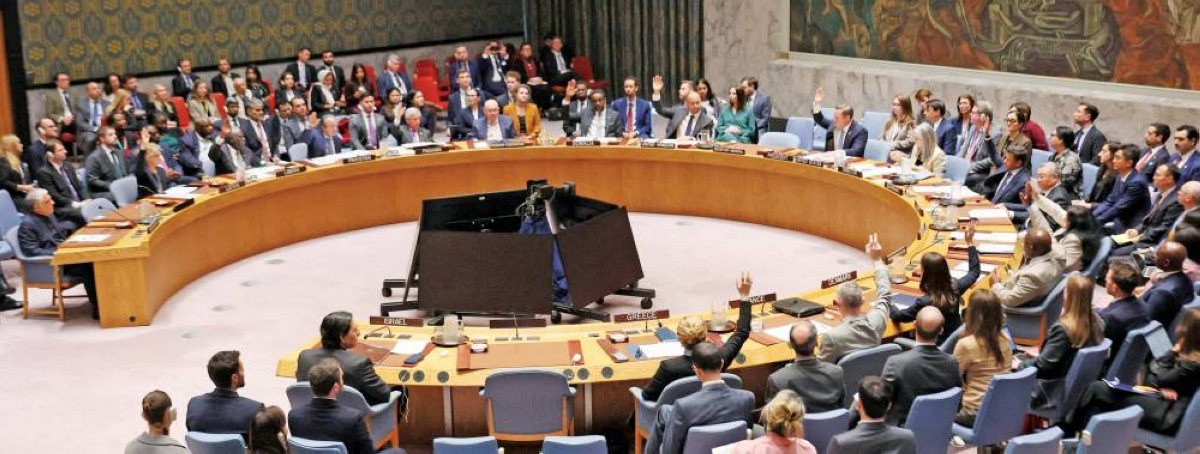
This significant wave of communications culminated in a triumphant moment for the UAE within the United Nations Security Council, where 135 countries adopted Resolution 2817 of 2026, which condemned the Iranian attacks on the territories of the Gulf Cooperation Council states and the Hashemite Kingdom of Jordan.
The support from 135 nations reflects the solid position the UAE has established in the international consciousness as a nation of peace and development, as well as a reliable partner in enhancing regional and global stability.
Broad Solidarity
This widespread international solidarity is not merely a fleeting occurrence or a reactive stance to a specific political moment; it results from a long history of balanced policies pursued by the UAE since its inception. Our leadership has focused on establishing foreign relations grounded in clear principles, primarily respecting national sovereignty and refraining from interference in domestic affairs, while also fostering values of good neighborliness and mutual cooperation in service of people’s interests and promoting development and stability.
In this context, the UAE has provided an outstanding model of a nation that combines political strength with ethical commitment in its international relationships. It has adopted a foreign policy based on dialogue and understanding, prioritizing diplomacy while diligently protecting its sovereignty and national security through legitimate means. This balance has helped to solidify the UAE’s image as a responsible partner in the international community, which is reflected in the support and solidarity expressed by many nations and international organizations.
Position of Nations
In times of significant challenges, the true stature of nations is revealed, highlighting the value of the policies they have developed over the years. International reactions are not just fleeting diplomatic statements; they manifest as clear solidarity positions that reflect the level of trust that the nation has earned in the international community. The broad global solidarity with the UAE, in response to blatant Iranian aggression, serves as a clear indication of the world’s appreciation for the role that the UAE plays in supporting stability and advancing values of cooperation and peace.
This solidarity has not arisen in a vacuum, but is rather the outcome of a long path of political, diplomatic, and humanitarian work that the UAE has undertaken since its unification. The UAE has effectively managed its foreign relations, balancing an active political presence with a calm diplomatic approach that favors dialogue over escalation and seeks common solutions instead of deepening disputes.
This approach has earned the nation widespread respect and positioned it as a trusted partner in numerous international initiatives aimed at resolving crises and enhancing development opportunities.
Among the key factors that have broadened the UAE’s circle of solidarity is the humanitarian role the country has embraced worldwide. Over the past decades, it has evolved into one of the foremost nations in providing humanitarian and developmental aid, readily extending assistance to countries and peoples facing crises and disasters.
The UAE’s support encompasses various sectors, including emergency relief, building schools and hospitals, and supporting education and healthcare programs, in addition to implementing developmental projects that seek to improve the lives of the most vulnerable communities.
Humanitarian Presence
This extensive humanitarian engagement has transcended mere relief efforts; it has become an integral part of the UAE’s vision for its role in the world. The nation perceives humanitarian work as a moral obligation and a civilizational responsibility, which has positioned its initiatives to receive widespread recognition from countries and international organizations. It is only natural for this appreciation to reflect in the solidarity shown by nations when the UAE faces any threats to its security or sovereignty.
Furthermore, the UAE’s success in building a diverse and advanced economy has enhanced its international standing, transforming the country into a global hub for trade, investment, and innovation.
This success has led to an expansion of its economic ties with various countries worldwide, making the stability of the UAE a common interest for many international partners.
Consequently, any aggression targeting the UAE is also viewed as a threat to economic and commercial stability in the region.
In this context, the UAE’s diplomacy has played a pivotal role in establishing a broad network of strategic partnerships with major countries, alongside strengthening ties with developing nations.
Moreover, the UAE’s contribution to supporting security and stability within the region is crucial in enhancing international solidarity. The nation has participated in international efforts to combat terrorism and extremism while supporting initiatives aimed at ensuring maritime navigation security and safeguarding global trade routes.
These efforts have positioned the UAE as a critical partner in reinforcing regional security, explaining the supportive stances expressed by numerous nations when faced with threats to their own security.
Respect for Sovereignty
The aggressions targeting the UAE are not merely violations of one country’s sovereignty; they represent a challenge to the principles underpinning the international system, primarily respect for national sovereignty and the rejection of the use of force in international relations.
Thus, the global solidarity with the UAE underscores a commitment to upholding these principles and reflects a growing awareness regarding the importance of maintaining stability in a region recognized as one of the most geopolitically and economically sensitive areas in the world.
Notably, this solidarity extends beyond governments to include numerous international and regional institutions that have emphasized their rejection of any aggression that threatens the security or stability of the UAE.
This illustrates the esteemed status the country holds within the international system, where it is perceived as a positive force contributing to stability and supporting development efforts worldwide.
The UAE’s active international presence is not by chance; it is the result of a long-term strategic vision that places people at the heart of the development process and connects internal progress with openness to the world.
This approach has led to the establishment of a solid international reputation for the country as a model of moderation, tolerance, and constructive cooperation.
Considering these factors, the wave of international solidarity with the UAE can be understood as a natural reflection of the role that the nation plays within its regional and international context.
Countries standing alongside the UAE today are expressing their appreciation for a political approach grounded in mutual respect and their support for a nation that has proven through its trajectory to be a responsible partner in tackling global challenges.
The international solidarity with the UAE in the face of targeted aggressions highlights a fundamental truth: that a policy rooted in moderation, respect for sovereignty, and humanitarian effort can build a vast network of relationships based on trust.
This trust is what allows the UAE to enjoy widespread support from the international community today, continuing its role in reinforcing the values of peace, cooperation, and development, which in turn bolsters stability in the region and serves the interests of humanity as a whole.