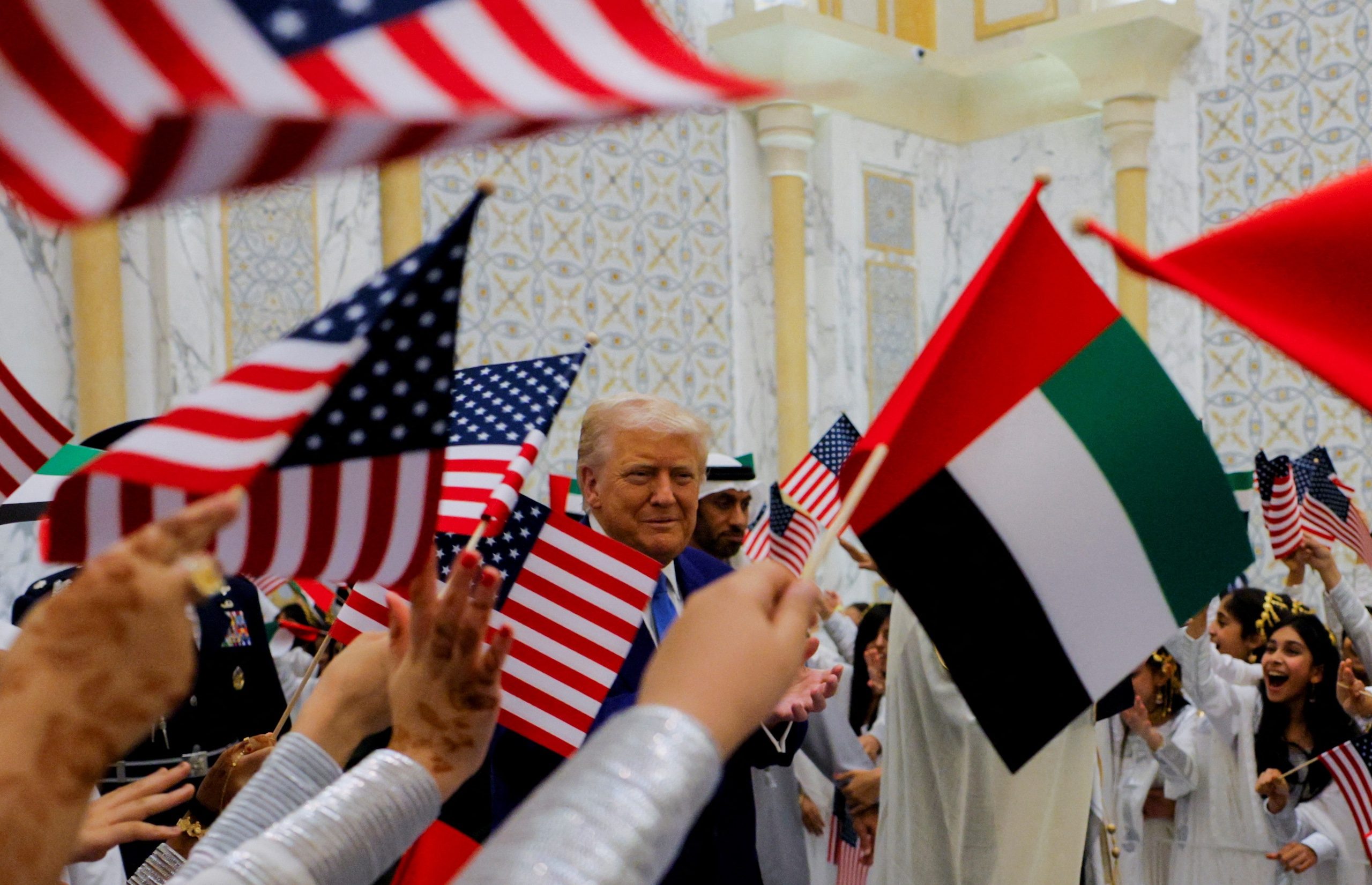
In the aftermath of Donald Trump’s recent trip to the Gulf region, the UAE stands to benefit significantly from its AI partnership with the United States.
While signing agreements is one element, establishing a robust foundation for a lasting collaboration is quite another, particularly in the fiercely competitive realm of artificial intelligence.
Among the many agreements disclosed during Trump’s four-day visit, the US-UAE AI acceleration initiative emerges as particularly noteworthy.
The highlight of this new collaboration is the upcoming development of a 5-gigawatt AI campus in Abu Dhabi, attracting attention not only for its impressive scale but also for its ambitious vision. This expansive 10-square-mile facility, to be constructed by G42 in conjunction with American technology firms, will become the largest AI establishment outside of the United States.
This initiative positions the UAE as a key strategic ally in the region, with US Secretary of Commerce Howard Lutnick referring to the partnership as “a landmark collaboration for the Middle East.”
Many analysts view this as a crucial turning point in US-UAE relations, showcasing increasing mutual trust and collaboration in key sectors such as AI, cloud computing, and cybersecurity. The strengthening of this trust will also allow the UAE to begin importing 500,000 of Nvidia’s most advanced AI chips as early as this year.
This agreement has the potential to significantly enhance the UAE’s goals of becoming a global leader in AI. The import of high-performance chips represents a major boost to the country’s computational power and capabilities.
The availability of Nvidia hardware will enable the application of advanced AI models across various fields, including healthcare, finance, transportation, energy, education, and space.
This collaboration underlines America’s support for the UAE’s ambitions in the field of AI, providing the Emirates with a powerful ally.
However, the UAE has not been waiting passively for Trump’s endorsement. The nation has been actively pursuing its own AI strategy, taking meaningful steps to establish itself as a hub through national initiatives, significant investments, international collaborations, and the establishment of focused institutions.
In 2017, the UAE launched the National Strategy for Artificial Intelligence 2031, a long-term roadmap designed to prioritize AI integration across essential sectors while fostering local talent and supportive regulations.
Two years later, Abu Dhabi inaugurated the Mohamed bin Zayed University of Artificial Intelligence (MBZUAI), marking the first postgraduate institution globally dedicated exclusively to AI studies. Since then, progress has accelerated, and just recently, the UAE became the first nation to mandate AI education from primary through secondary levels.
Are There Any Drawbacks?
The transformative potential of this agreement for the UAE’s tech landscape is undeniable, especially with the foremost AI superpower as its partner. Nonetheless, like any substantial partnership, its success relies on mutual benefit.
Through this long-term accord, Washington becomes instrumental in shaping the deployment of AI throughout the Gulf, providing a strategic counterbalance to the increasing technological influence of China and Russia in the area.
This arrangement communicates a clear intent: the US is committed to spurring innovation alongside trusted allies while enhancing its technological and geopolitical advantages in relation to rival nations.
Lutnick candidly described the agreement with the UAE as “a significant milestone in realizing President Trump’s vision for American dominance in AI.”
There were reservations in Washington regarding the formation of a partnership with a new associate in such a sensitive domain; however, robust controls and ongoing oversight are anticipated to be integral parts of the agreement to protect US national security interests. American firms will manage the data centers in the UAE and provide cloud services under American governance throughout the region.
This brings us to the soft power aspect. With the involvement of US tech companies, the partnership is likely to incorporate training programs, research and development efforts, and talent exchanges. This will not only help build AI skills within the UAE but will also promote American standards, ethical considerations, and governance frameworks.
Many supporters of the agreement believe its advantages far outweigh the potential downsides, perfectly aligning with the UAE’s ambition to establish itself as a leading global AI hub.
It represents a mutually beneficial alliance: while America gains leverage and alignment, the UAE enhances its credibility, capability, and technological prowess. Both parties stand to gain from this partnership over the long haul.
Justin Harper is a recognized business journalist and editor with over 20 years of experience across London, Singapore, and Dubai.