- Concerns regarding disruptions in the Strait of Hormuz
- Delivery of produce through land routes
- The UAE relies on imports for 85 to 90 percent of its food supply
A leading importer and distributor of fresh fruits and vegetables in the UAE is boosting its orders by 50% to ensure supermarkets remain well-stocked.
Fears are rising over possible supply chain interruptions in the Strait of Hormuz, a crucial trade route, which could lead to delays or stranded perishable goods.
NRTC Group has reported that it transported 3,000 tonnes of fruits and vegetables via land routes over the past week, utilizing corridors through Jordan, Turkey, Syria, and Egypt to reach the UAE.
Additionally, 500 tonnes were flown in aboard Emirates and Etihad Airways, while another 1,200 tonnes arrived by sea through the Port of Khor Fakkan and the Port of Fujairah. Earlier this week, 17,000 tonnes were also delivered.
“To prevent shortages, we have increased our imports by 50%,” stated chief executive Mohammed Alrifai. “There is absolutely no shortage at this time.”
NRTC collaborates with nearly 155 partners around the globe, spanning Egypt, South Africa, and various European countries.
However, shipping expenses may increase by up to 20% as shipments are redirected through alternative points of entry, according to Alrifai.
The company usually relies on Jebel Ali Port in Dubai, which processed approximately 15,000 containers or nearly 300,000 tonnes of goods last year, as noted by Alrifai.
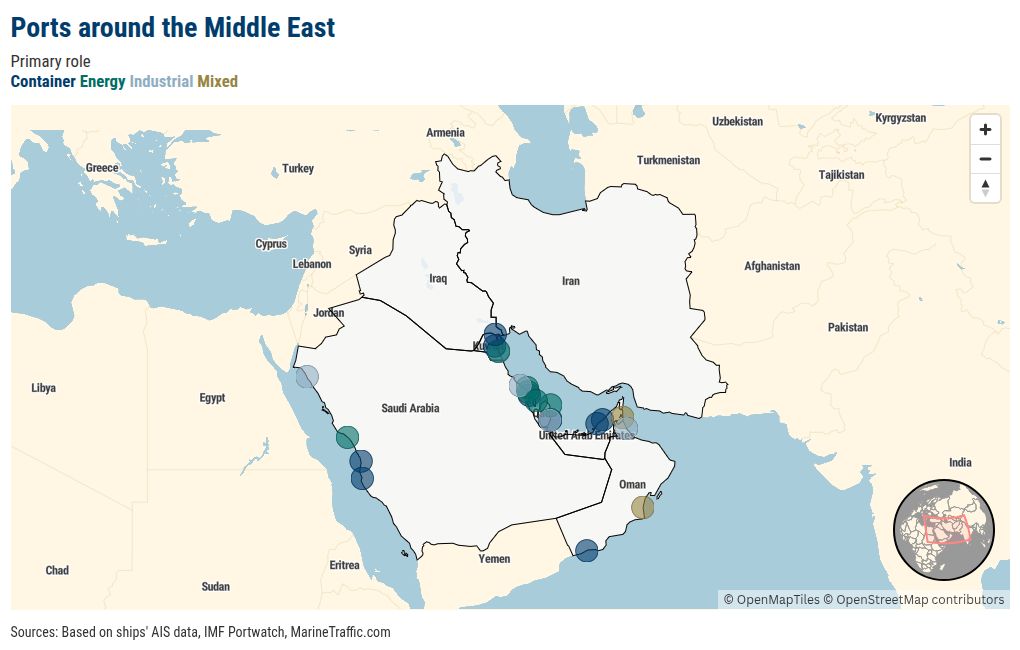
With drone attacks affecting Jebel Ali, NRTC has transitioned to using the Port of Khor Fakkan and Port of Fujairah on the UAE’s east coast, along with Oman’s Port of Sohar and Port of Salalah. In Saudi Arabia, they have resorted to the Jeddah Islamic Port and expanded their overland truck routes.
Alrifai explained that the standard turnaround time from Jebel Ali was 24 hours, but the rerouting has extended this to a wait of up to five days. He mentioned that the increase in orders will help alleviate any processing delays, although it has come at a higher cost.
“We have no product shortages. However, the alternative arrangements are somewhat expensive,” Alrifai emphasized, ensuring there are no plans to transfer the increased costs to customers. “We are committed to our clients and have not raised prices for clients under locked-in agreements. We honor those commitments.”
This month, Abdulla bin Touq Al Marri, the minister for economy and tourism, announced that the UAE maintains strategic reserves of essential goods sufficient to meet needs for four to six months. Monitoring of inventory levels and prices is ongoing, he confirmed.
The World Economic Forum states the UAE imports between 85% to 90% of its food. The UAE’s National Food Security Strategy 2051 focuses on enhancing sustainable local production through advanced agricultural technologies.
Customs corridors across the Gulf Cooperation Council (GCC), previously mostly theoretical, may gain traction. Recently, Saudi Arabia initiated a new Logistics Corridors Initiative aimed at bolstering supply chain resilience and simplifying cargo movement between the kingdom’s ports and those in the GCC.
Oman and the UAE have also set up a ‘green corridor’ that allows goods to arrive at Omani ports and cross the border with expedited customs processes.
Justin Alexander, an economist focusing on the GCC based in the US, noted that escalating fuel prices would have the most immediate and severe impact on costs in the UAE. Brent crude oil has surged above $100 a barrel and is expected to climb further.
“Rising logistics expenses and limited capacity will inevitably lead to increased prices for food and other imports while the Strait of Hormuz remains closed and port operations are disrupted,” he remarked.
The UAE has price controls on nine essential commodities, including cooking oil, eggs, dairy products, rice, sugar, poultry, legumes, bread, and wheat. Any price increases must receive prior approval from the relevant ministry and a national committee tasked with evaluating such requests.
Additional Insights:
Tom Harvey, general manager of the supermarket chain Spinneys, noted that consumers have so far avoided the brunt of rising costs.
“There have been numerous disruptions recently – Covid-19, the Suez Canal blockage, the Red Sea crisis. Each has been effectively managed with minimal impact on customers both now and in the long run,” he added.
Erika Doyle, CEO of the Dubai-based beverage company Drink Dry, mentioned their efforts to absorb as much of the additional costs as possible, although a prolonged disruption could necessitate a reassessment of pricing. Drink Dry exports products from the UAE to markets including Saudi Arabia, Kuwait, Oman, and India, a network currently experiencing delays. “Shipments are still on the move, but rerouting has added complexity and longer lead times for certain destinations,” Doyle explained.