- Tourism hit hard by conflict
- Price competition is discouraged
- Incentives through food and beverage offerings
Hotels in Dubai are being encouraged to maintain their pricing strategies as the conflict in Iran impacts travel to the region.
Experts in the industry caution that aggressive discounts or unexpected price increases could tarnish Dubai’s reputation as a premier destination on the global stage.
With a decline in international visitors, hotels are looking toward the local market and other revenue opportunities, such as their dining services, to mitigate the impact.
The tourism sector was one of the first to feel the effects when the conflict escalated, leading to flight cancellations across the area and leaving many guests stuck in hotels.
In January, the average occupancy across Dubai’s 827 hotels reached 86 percent, according to the emirate’s tourism authority. Although official occupancy numbers for February and early March are not yet available, one local consultant reported that occupancy has now plummeted to approximately 25 percent.
“Hotels must optimize sales from whichever demand is available. If occupancy is only at 20 or 30 percent, they need to make the most of that small segment,” stated Judith Cartwright, CEO of Black Coral Consulting, a hotel strategy firm.
She also emphasized avoiding a downward price spiral. “My guidance would be not to engage in a reckless price war. It undermines brand value. Following the pandemic, Dubai succeeded in elevating its market positioning,” she noted.
“Engaging in a price war will not benefit hotels collectively.”
At the beginning of the year, hotel rates in Dubai rose by 17 percent, averaging AED775 per night, according to data from Dubai Tourism.
Additional Insights:
Precise statistics on average daily rates (ADRs) have not yet been published. However, a review by AGBI of various online travel booking sites indicates that luxury hotel rates have dropped below this average recently.
For example, the Fairmont The Palm, which garnered attention following a drone-related fire during the initial attacks on February 28, is offering stays at AED900 this weekend, including breakfast. The operator, Accor, chose not to comment on this matter.
Mamoun Hmidan, Chief Business Officer at regional online travel agency Wego, informed Dubai Eye Radio that rates for some Dubai hotels have decreased by as much as 40 percent recently.
Most hotel operators reached out to by AGBI either declined to comment or did not respond, with Media One Hotel’s General Manager Mark Lee sharing his observations on the current situation.
“It’s reminiscent of the groundhog day scenario we experienced six years ago,” he commented, drawing a parallel to the Covid-19 pandemic. “Few guests are arriving unless they are returning residents. Our focus now is on local patrons or accommodating long-term guests.”
“Hotels have been advised against raising prices for guests extending their stays. The message from Dubai Tourism is to keep prices steady,” he explained.
However, there are instances of extreme discounting. Cartwright cautioned against hotels dramatically slashing prices to attract quick business.
“Focusing on unique experiences can be more beneficial than lowering rates. Offering room rates that can be redeemed for food and beverage may temporarily attract guests, but it ultimately erodes market health,” she warned.
“Hotels hold a duty to preserve their brand integrity. Substantial price reductions can attract the wrong clientele. Many hotels are in a state of panic,” she added.
One hotel pursuing such promotions is FIVE Palm Jumeirah, which did not provide comments. The adjacent Hilton Palm Jumeirah is also running a similar offer but declined to provide further information.
Similar to during the pandemic, hospitality professionals are redirecting their efforts to local customers to sustain operations. “Unlike the pandemic, we can keep the bars open, which supports the local market,” added Lee.
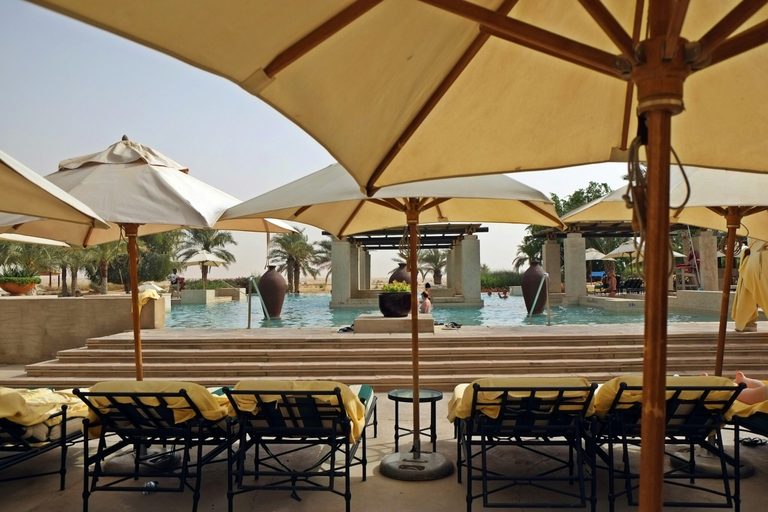
Cartwright noted robust occupancy rates in remote desert hotels, far removed from potential conflict zones, indicating strong local patronage.
Natasha Hatherall-Shawe, founder of TishTash communications agency, stated that hotels she collaborates with are relying on local clientele.
“The sector has historically demonstrated resilience, and many establishments are using this time to fortify relationships within the local community and build loyalty among nearby customers,” she elaborated.
“When visitors return, those venues that have maintained local engagement and visibility will likely rebound swiftly.”
In a statement, Dubai Tourism emphasized that “the safety and well-being of residents, visitors, and citizens is the highest priority for the UAE.”
“In line with Dubai’s established response measures, protocols have been enacted across the tourism and hospitality sectors. Hotels have been advised to assist affected guests by allowing extensions under existing booking terms,” concluded the statement.